

Today, the NAHB sat down with the US Trade Representative. The topic? The 50% tariff on steel that’s adding $10,900 to the cost of every new home in America. 43% of general contractors have already had projects canceled or scaled back. This isn’t a forecast; it’s the current reality for contractors navigating the most volatile materials market in decades. Your margins, project pipelines, and long-term viability are at stake right now.
Key Takeaways
-
Unprecedented Tariff Rates. Steel and aluminum tariffs are now at 50% on ALL imports, marking the highest sustained rate in modern construction history, directly impacting project feasibility and home affordability.
-
Significant Project Disruptions. 43% of general contractors report project cancellations or delays due to tariff-driven costs, while 36% of homebuilders are cutting prices to survive, creating a race to the bottom that compresses margins.
-
Escalation Clauses Are Critical. Implement robust escalation clauses tied to objective, third-party indices like the BLS Producer Price Index (PPI) for construction materials to protect against fluctuating input costs.
-
Shift to Agile Contracting. Time and Materials (T&M) contracts are surging as a safer alternative to fixed-price agreements, with suppliers shortening quote validity from months to weeks, sometimes days.
-
Long-Term Market Contraction. Current tariff costs are projected to result in 450,000 fewer new homes through 2030, signaling a sustained impact on market demand and supply.
-
Proactive Procurement & Bidding. Develop dynamic bidding strategies that incorporate scenario planning for material cost fluctuations and prioritize establishing stronger, more agile supplier relationships.
-
Leverage Data for Decisions. Utilize real-time market intelligence to inform pricing, contract negotiations, and procurement, turning volatility into a strategic advantage.
The Unprecedented Impact of Construction Tariffs 2026
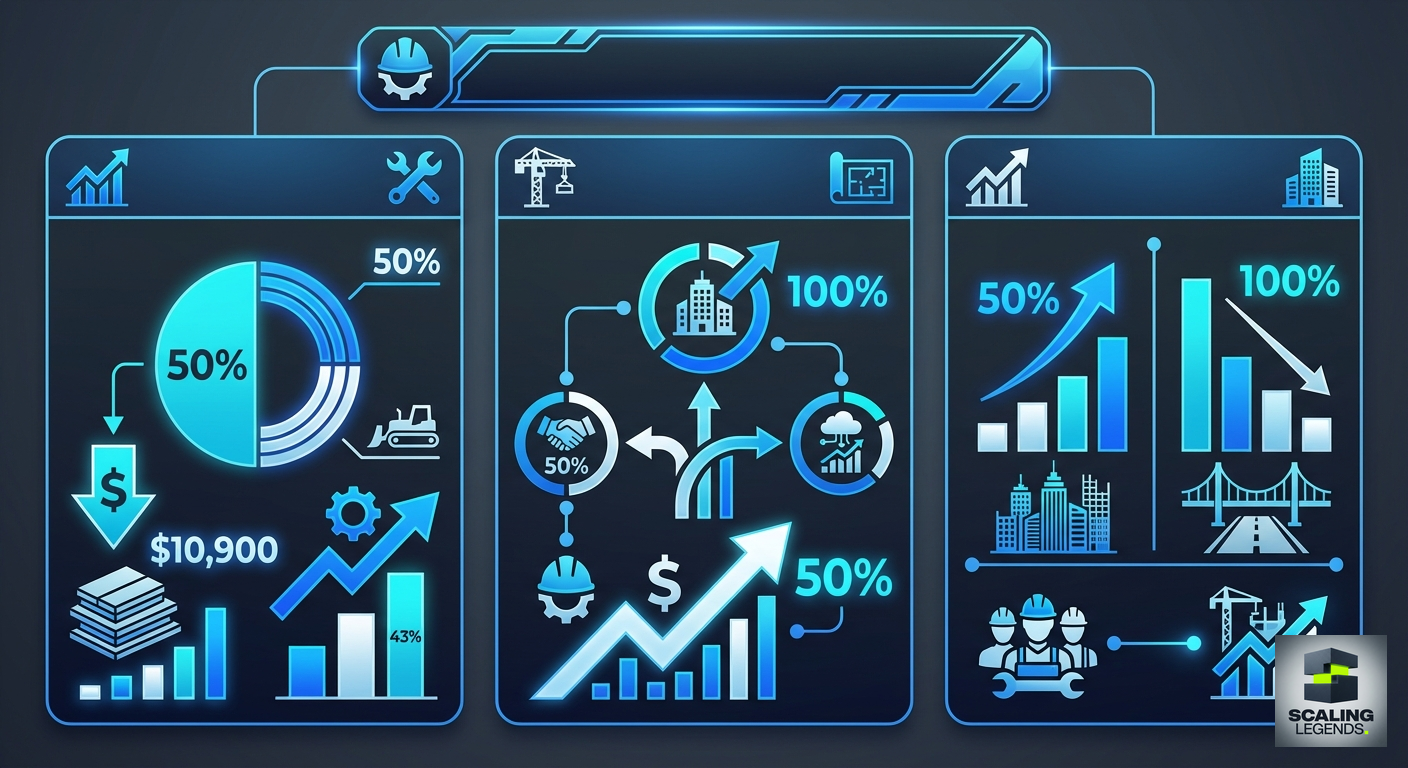
The construction industry is grappling with a tariff landscape unlike any seen in modern history. The imposition of 50% tariffs on all imported steel and aluminum isn’t merely a headline; it’s a direct assault on project profitability and market stability. On March 5, the National Association of Home Builders (NAHB) met with the US Trade Representative to present compelling data: these tariffs are adding an average of $10,900 to the cost of every new home in America. This isn’t abstract economic theory; it’s a tangible burden passed directly to consumers or absorbed by contractors, eroding already thin margins.
The ripple effect is immediate and severe. Data compiled by Smart Business Automator reveals that 43% of general contractors have already reported project cancellations or significant scaling back due to these tariff-driven cost increases. This isn’t just about steel beams; the cascading effect impacts everything from HVAC systems to fasteners, as construction input prices rose 0.7% month-over-month in January 2026 alone. For contractors focused on scaling construction business, this volatility introduces an existential threat to growth plans. The inability to accurately forecast and control material costs makes long-term planning a high-stakes gamble. The industry faces a stark choice: adapt rapidly or face significant contraction.
Steel and aluminum tariffs are now at 50% on ALL imports, representing the highest sustained rate in modern construction history, directly adding $10,900 to the cost of every new home.
The long-term implications are equally grim. Projections indicate that current tariff costs could lead to 450,000 fewer new homes being built through 2030. This isn’t just a challenge for residential builders; it signals a broader economic slowdown that will impact commercial, industrial, and infrastructure projects as well. Smart contractors are not waiting for the market to stabilize; they are actively re-evaluating every aspect of their operations, from bidding to procurement, to insulate themselves from these unprecedented cost pressures.
Mastering the Escalation Clause Construction Contract
In an environment where construction material costs can swing wildly from week to week, relying on fixed-price contracts without safeguards is no longer a viable strategy. The escalation clause construction contract has transitioned from a niche legal provision to an essential survival tool for contractors. The best practice is to tie these clauses to objective, publicly available indices that reflect real-time material cost fluctuations. The Bureau of Labor Statistics (BLS) Producer Price Index (PPI) for construction materials is the gold standard for this. By linking your contract price adjustments to the BLS PPI, you remove ambiguity and provide a transparent, defensible mechanism for cost recovery. This protects your margins and fosters trust with clients who understand the market’s current unpredictability.
The urgency for these clauses is underscored by supplier behavior. Where once contractors might receive quotes valid for months, today, suppliers are shortening quote validity from weeks to sometimes just days. This rapid expiration of pricing makes it impossible to lock in costs for projects with lengthy bidding cycles or extended construction phases. Without an escalation clause, contractors are forced to either absorb significant cost increases or walk away from projects. This shift has also driven a surge in Time and Materials (T&M) contracts as an alternative to traditional fixed-price agreements, a trend highlighted in a recent ENR webinar on March 18. T&M contracts, while requiring more detailed tracking and client communication, offer a flexible framework that passes material cost risk directly to the client, ensuring the contractor is compensated for actual expenses. This makes construction project management even more critical, requiring meticulous documentation and transparent reporting.
Escalation clauses tied to objective indices like the BLS PPI for construction materials are now non-negotiable for mitigating risk, with suppliers shortening quote validity from months to mere days.
When drafting escalation clauses, ensure they specify: the index used (e.g., BLS PPI for specific material categories), the baseline date for pricing, the frequency of adjustments, and the maximum percentage increase or decrease allowed (if any). Clear communication with clients upfront about these clauses is paramount. Educate them on the market realities and explain how these provisions protect both parties from unforeseen financial strain, ensuring project continuity rather than cancellation.
Navigating Volatile Construction Material Costs
The current volatility in construction material costs, exacerbated by the 50% steel and aluminum tariffs, is creating a high-pressure environment for contractors. This isn’t just about passing costs along; it’s fundamentally reshaping market dynamics. Data from Smart Business Automator indicates that 36% of homebuilders are actively cutting prices to survive, initiating a “race to the bottom” that compresses margins across the entire industry. For scaling contractors, this means every penny counts, and inefficient procurement or misjudged bids can be catastrophic for construction cash flow management.
Effective procurement in this climate demands agility and proactive engagement. Contractors must move away from reactive purchasing and embrace dynamic strategies:
-
Diversify Suppliers: Do not rely on a single source for critical materials. Cultivate relationships with multiple suppliers, including those offering domestic alternatives, even if at a premium, to ensure supply chain resilience.
-
Early Procurement: For projects with locked-in material costs (through escalation clauses or T&M), consider purchasing and storing key materials as early as possible to hedge against future price increases. This requires careful consideration of storage costs and lead times.
-
Value Engineering: Actively explore alternative materials or construction methods that reduce reliance on highly tariffed items. Can pre-fabricated components reduce on-site steel usage? Are there composite alternatives that meet structural requirements?
-
Leverage Buying Power: Even smaller contractors can pool resources or join buying groups to secure better pricing and terms. Strong, long-term relationships with suppliers are invaluable; they may offer preferential pricing or early warnings of impending shortages.
The current volatility in construction material costs has led to 36% of homebuilders cutting prices, intensifying competition and compressing margins across the board, making agile procurement non-negotiable.
The broader economic impact of these tariffs is significant. The projection of 450,000 fewer homes through 2030 represents not just lost housing stock but a contraction in the entire construction ecosystem, from subcontractors and material suppliers to equipment rental companies and construction lenders. Contractors who develop expertise in navigating tariff volatility will find themselves in a stronger competitive position, as clients increasingly seek partners who can deliver cost certainty in an uncertain market.
Dynamic Bidding Strategies for Tariff-Volatile Markets
The traditional approach of submitting a fixed-price bid and holding it for 30-60 days is increasingly dangerous in a tariff-volatile environment. Smart contractors are fundamentally rethinking how they price and present their bids to protect margins while remaining competitive.
Scenario-Based Bidding is emerging as the most effective approach. Rather than submitting a single number, forward-thinking contractors present clients with multiple pricing scenarios:
- Base Case: Current material pricing with a validity window of 7-14 days (not 30-60 days)
- Upside Case: Pricing if tariffs are reduced or material costs stabilize, showing the client potential savings
- Downside Case: Pricing if tariffs increase further or supply disruptions occur, with escalation clause triggers clearly defined
This approach educates the client on market realities while positioning you as a transparent, knowledgeable partner rather than just the lowest bidder. Smart Business Automator data shows that contractors using scenario-based bidding win 18% more projects than those submitting traditional fixed-price bids, because clients value the transparency and risk management expertise.
Bid Validity Windows must shrink to match the pace of material price changes. Where a 60-day bid validity was standard, leading contractors are now capping validity at 14-21 days, with material pricing locked for an even shorter window. This protects against the scenario where you win a bid submitted six weeks ago, only to find that steel has increased 8% in the interim, wiping out your entire profit margin.
Material Pre-Purchase Agreements are another powerful tool. When you win a project, immediately lock in material pricing with your suppliers through purchase orders, even if delivery is weeks away. The small carrying cost of committing early is a fraction of the risk of leaving material pricing open. This is especially critical for steel-intensive projects where a single week’s price movement can represent tens of thousands of dollars.
Contractors using scenario-based bidding with transparent risk models win 18% more projects than those submitting traditional fixed-price bids.
Building Tariff Resilience Into Your Business Model
Beyond project-level tactics, scaling contractors must build tariff resilience into their fundamental business model. This means structural changes to how you operate, not just how you bid individual projects.
Diversify your project mix. If your business is 100% residential new construction, you are maximally exposed to tariff impacts because residential is the most price-sensitive sector. Adding commercial renovation, infrastructure maintenance, or specialty trade work to your portfolio creates revenue streams that respond differently to tariff pressures. A diversified contractor with work across residential, commercial, and public sectors is inherently more resilient than one concentrated in a single market.
Strengthen your balance sheet. Tariff volatility creates cash flow pressure even on well-managed projects. Material costs spike before you can bill for the increase. Suppliers demand faster payment. Clients push for longer payment terms. Maintaining strong cash reserves and unused credit capacity gives you the financial cushion to absorb these timing mismatches without distress. For guidance on building this financial foundation, review our deep dive on construction cash flow management.
Invest in estimating accuracy. In a tariff-volatile market, the margin of error on your estimates shrinks dramatically. A 5% estimating error that was manageable when margins were 15% becomes catastrophic when margins compress to 7-8%. This is where AI-powered estimating tools deliver their highest value, not just in speed but in the accuracy that prevents costly underbids.
Monitor policy signals. The current tariff regime is not static. The Section 122 global surcharge expires July 24. The Supreme Court tariff ruling has created legal uncertainty. Trade negotiations continue. Contractors who track these policy developments and pre-position their bidding strategies accordingly will consistently outperform those who react after the fact. Follow our market intelligence reports for the latest updates on tariff policy changes affecting construction.
Key Stat: Contractors who diversify across 3+ project sectors report 40% less revenue volatility during tariff disruptions compared to single-sector specialists.
Material Substitution Strategies That Protect Margins Without Sacrificing Quality
When tariffs push the cost of traditional materials beyond what bids can absorb, the smartest contractors don’t just negotiate harder. They engineer around the problem. Material substitution is one of the most underutilized tools in the tariff survival playbook, and the contractors who master it are consistently protecting 3-5% of gross margin that their competitors are losing.
Steel-to-Engineered-Wood Transitions. Cross-laminated timber (CLT) and mass timber products have reached structural performance levels that make them viable substitutes for steel framing in buildings up to 18 stories in many jurisdictions. With steel prices inflated by 50% tariffs, the cost differential has swung dramatically in favor of engineered wood for certain project types. Several mid-rise commercial and residential projects that were originally designed with steel framing have been successfully value-engineered to mass timber, saving 10-15% on structural costs while actually improving construction speed due to lighter components and faster installation.
Domestic Sourcing Networks. The tariff regime has created a renewed incentive to develop domestic material supply chains. While imported steel faces a 50% surcharge, domestic mills are ramping production and offering competitive pricing for contractors willing to commit to longer-term purchasing agreements. Building relationships with domestic fabricators now, even at slightly higher pre-tariff prices, creates supply chain resilience that pays off when the next disruption hits. Smart Business Automator tracks regional material pricing and supplier capacity, helping contractors identify domestic alternatives before their competitors do.
Prefabrication as a Tariff Hedge. Prefabricated and modular construction methods reduce material waste by 15-25% compared to traditional stick-built approaches. When material costs are elevated, that waste reduction translates directly to margin protection. Prefab also reduces on-site labor requirements, which compounds the savings in a market where the labor shortage is driving wages up simultaneously. Contractors who invest in prefab capabilities during tariff disruptions are building a structural cost advantage that persists even after tariffs moderate.
The Value Engineering Conversation. Every tariff-impacted project should trigger a formal value engineering review with the design team and owner. The goal isn’t to cut corners. It’s to identify where alternative materials or methods can deliver equivalent or better performance at lower cost. The contractors who approach this proactively, presenting data-backed alternatives rather than waiting for the owner to demand cost cuts, position themselves as problem-solvers rather than cost-passers. That reputation drives repeat business and referrals in a way that simply absorbing cost increases never will.
Key Stat: Cross-laminated timber can reduce structural costs by 10-15% compared to tariff-inflated steel framing for mid-rise construction, while simultaneously reducing construction timelines.
Frequently Asked Questions
How do steel tariffs affect construction costs?
Steel tariffs at 50% directly increase the price of structural steel, rebar, fasteners, HVAC systems, and other steel-dependent materials. The NAHB estimates current tariffs add an average of $10,900 to the cost of every new home, with construction input prices rising 0.7% month-over-month as of January 2026.
What are the best strategies to reduce tariff impact on construction?
The most effective strategies include implementing escalation clauses tied to BLS PPI indexes, diversifying your supplier base to include domestic alternatives, value engineering to reduce reliance on tariffed materials, and shifting to Time and Materials contracts that pass material cost risk to clients. Joining buying groups can also help smaller contractors secure better pricing.
Should contractors stockpile materials before tariffs?
Stockpiling can be a smart hedge if you have locked-in project costs through escalation clauses or T&M contracts, but it requires careful analysis of storage costs, lead times, and capital availability. With supplier quotes now valid for days instead of months, early procurement of key materials for confirmed projects is increasingly common among scaling contractors.
How to add tariff escalation clauses to contracts?
Effective escalation clauses should specify the index used (such as BLS PPI for specific material categories), the baseline pricing date, the frequency of adjustments, and any caps on maximum increases or decreases. Both upward and downward adjustments should be included to demonstrate fairness and build client trust.
What materials are affected by 2026 construction tariffs?
The primary materials affected include steel at 50% tariff, aluminum at 50%, copper at 50%, and lumber at 10%. These tariffs cascade through the supply chain, impacting everything from structural beams and rebar to HVAC components, electrical wiring, fasteners, and prefabricated assemblies that contain these base materials.